Explore the top experiences and activities to enjoy Santiago and its surroundings.
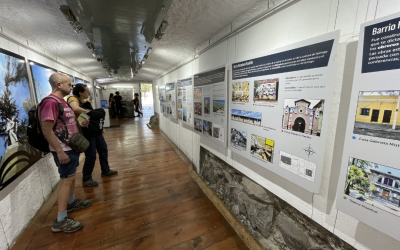
The Tourist Information Office of the Government of Santiago is located in the heritage building of the Santiago Stock Exchange, an icon of the historic centre of the city. Here you can find information, maps and recommendations to enjoy the attractions of the entire region, as well as participate in free activities such as guided tours of the building upon registration.
Address: Edificio La Bolsa, Calle Bandera esquina calle Moneda, Santiago. Timetable: Monday to Friday from 08:30 to 17:30 hrs.
Other Offices
ILO Santiago Commune
Address: Plaza de Armas 989, Santiago. Timetable: Monday-Friday 09:30-17:00 / Saturday and Sunday 10:00-16:00
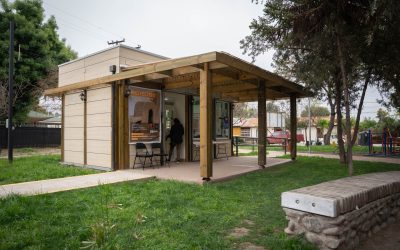
ILO Trapiche Park
Address: Manuel Rodriguez 277, Parque El Trapiche de Peñaflor. Timetables: Monday to Friday 09:00 - 17:00 hrs.
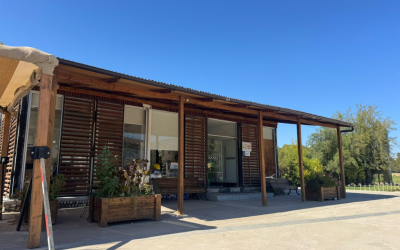
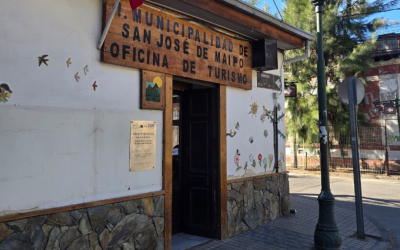
ILO San José de Maipo
Address: Calle Comercio 19788, Plaza de Armas San José de Maipo. Timetable: Monday to Thursday from 08:30 to 14:00 and from 15:00 to 17:30. Friday closing time 16:30 hrs.
ILO Melipilla
Address: San Antonio 361, Pomaire. Timetable: Friday to Sunday from 11:00 to 18:00 hrs.
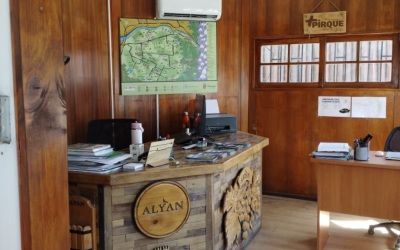
ILO Pirque
Address: Concha y Toro 02487, Pirque. Timetable: Monday to Friday from 08:30 to 17:30 hrs.
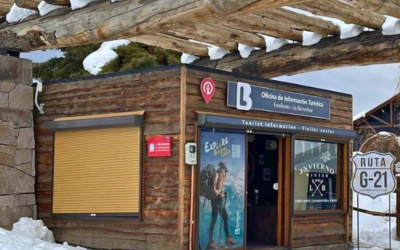
ILO Farellones
Address: Camino Los Cóndores #1298, Farellones Timetable: Monday to Friday from 09:00 to 16:30 hrs. Saturdays, Sundays and holidays from 09:00 to 17:30 hrs.
OUR CLIMATE
Explore the top experiences and activities to enjoy Santiago and its surroundings.
Summer (December to March)
Summer in Santiago is hot and dry, with clear skies and temperatures that usually exceed 30°C during the day. It is an ideal time to enjoy terraces, urban parks and mountain getaways.
Autumn (March to June)
During autumn, temperatures start to drop and the city fills with golden and reddish tones in its parks and neighbourhoods. The weather is mild and pleasant, perfect for walking around Santiago.
Winter (June to September)
Winter brings colder temperatures and some rain, with highs of around 15 °C. In the nearby mountain range it is snow season, which allows you to enjoy ski resorts a few kilometres away from the city.
Spring (September to December)
Spring offers mild days and more sunshine, with parks and gardens full of flowers. It is one of the best times to explore the city and enjoy outdoor activities.
GET AROUND SANTIAGO
Get around Santiago using its network of Metro, buses and public and private transport services, designed to facilitate every journey.
From the Airport to the City
By bus:
There are two companies that provide bus transport to and from the airport: Centropuerto (www.centropuerto.cl) TurBus (www.turbus.cl)
By city bus:
The RED extension, public transport that connects the airport with the Pajaritos Metro station, and which works with the Tarjeta bip!
In Transfer:
There are several private transport companies and authorised services can be hired at the air terminal itself.
By Taxi:
You can take official taxis inside the airport. We recommend you always prefer those registered or suggested by your accommodation, to avoid undue charges.
Hotel Coordination:
In most cases, transfers can be arranged directly with the hotel.
Within the City
In Metro:
Metro de Santiago stands out for its operational efficiency, cleanliness standards and safety levels, positioning it on a par with the leading
safety levels, placing it on a par with the main urban transport systems worldwide.
urban transport systems globally.
By city bus:
The public transport system in Santiago is called RED, better known among Chileans as “micros”. There are two types of buses: the trunk buses, which run on major avenues, such as Avda. Providencia and Alameda, and the alimentadores, which are smaller buses that connect smaller streets.
By bicycle:
Santiago is a city that offers a wide variety of cycling circuits, both long and short, for all tastes and difficulties. It has more than 550 km of urban cycle paths.
Important adviceFor beginners, it is best to start with short stretches of 5 or 7 kilometres and then increase the level of difficulty.
Download Santiago
Official brochures to discover the city, wine tourism and unmissable experiences in Santiago.
Santiago Urbano
It takes in neighbourhoods full of history, culture and local life, with sights, architecture and spaces that show the rhythm and identity of the city.
The official currency is the Chilean peso CLP$. The circulating coins are in denominations of 10, 50, 100 and 500 pesos. The banknotes in circulation are in denominations of 1,000, 2,000, 5,000, 10,000 and 20,000 pesos.
Currency exchange
You should only exchange money at banks or authorised bureaux de change.
Shopping in the trade
If you wish to make purchases in shops or shops, only Chilean pesos will be accepted. Many shops also have international debit and credit card payment systems. However, in smaller shops or in rural areas, you may need cash.
Tip
In restaurants, it is customary to tip the waiters 10% of the bill, which you can pay by card or cash (always optional).
Wifi connection
There are several wifi hotspots in the city of Santiago and most accommodation is free of charge. We also recommend buying a chip from any carrier for your phone.
Security
Santiago is a fairly safe city, however, we recommend that you take care of your mobile phone and camera in crowded areas.
Drinking water
Water in Santiago is completely safe to drink. We would appreciate it if you use as little plastic as possible on your trip, preferring reusable bottles.
Electric power
The voltage in Santiago and in Chile as a whole is 220 V / 50 Hz, and the plugs are type C and L.